
Peptide Research
Sterile Water vs Bacteriostatic Water for Peptides
Oct

Sterile water for peptides is a preservative-free diluent that labs use to reconstitute lyophilized peptide powder. Bacteriostatic water is the main alternative, and the choice between the two shapes how a lab handles each vial. In this guide, we compare both options, plus acetic acid and PBS, so you can plan your bench work with confidence.
Sterile water for peptides
Sterile water for peptides is purified water that has gone through sterilization and contains no preservative, so labs handle each opened container as single-use and discard any leftover liquid after the first withdrawal.
The lack of a preservative is the key detail. Once someone opens or punctures the container, nothing in the water slows microbial growth. As a result, most lab protocols call for a fresh container each time. That rule works well for a one-time prep, such as a single assay that uses the whole vial at once.
Sterile water also has a clear strength. Because it contains only water, it adds no extra compound to the solution. Therefore, some researchers prefer sterile water for peptides that may react with additives, or for studies where any extra ingredient could affect the readout.
When single-use makes sense
Picture a lab that runs a short study with one vial and one prep session. The team mixes the full amount, uses it the same day, and then cleans the bench. In that case, sterile water for peptides fits the workflow. However, the picture changes when a team needs to draw from the same vial over several sessions.
Bacteriostatic water for peptides
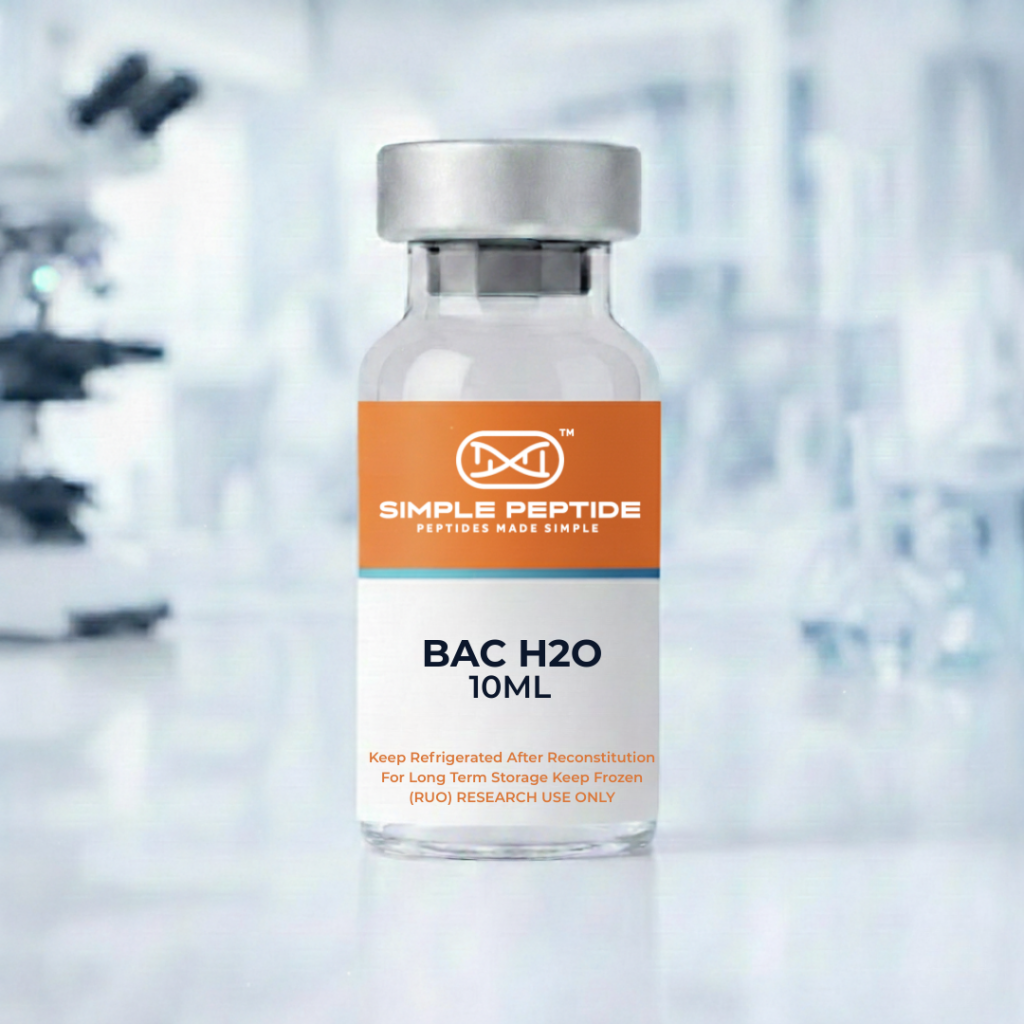
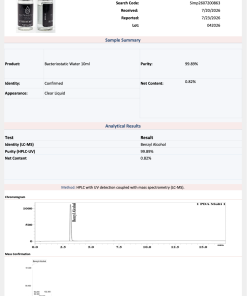
Bacteriostatic water for peptides is sterile water with 0.9% benzyl alcohol added as a preservative, which slows bacterial growth and lets labs draw from the same vial several times instead of discarding it after one use.
This multi-use design is the main difference. With sterile water, the container is single-use. With bacteriostatic water, by contrast, the benzyl alcohol keeps the vial usable across several withdrawals when the lab follows good aseptic practice. For that reason, many research teams keep bacteriostatic water on the shelf as their default diluent. You can read more about the preservative on the PubChem page for benzyl alcohol.
Think about a lab manager who runs a month-long project with many small preps. Opening a new container of sterile water for peptides each time adds cost and waste. So she switches to Bacteriostatic Water 30ML and logs each withdrawal on a simple sheet. Meanwhile, smaller projects can use the Bacteriostatic Water 10ML size. For a full overview, see our guide to bacteriostatic water for peptides.


Which diluent do researchers choose
Which diluent do researchers choose depends on the peptide’s solubility, the number of withdrawals the study needs, and whether any additive could interfere with the assay, so no single answer fits every lab.
Here is a simple way to compare the main options:
- Sterile water: no preservative, single-use, adds nothing to the solution.
- Bacteriostatic water: 0.9% benzyl alcohol, multi-use, the common default for many lyophilized peptides.
- Acetic acid (dilute): a mild acid that helps some peptides dissolve when they resist neutral water.
- Phosphate-buffered saline (PBS): a buffered salt solution that holds a stable, near-neutral pH for cell-based assays.
Acetic acid for hard-to-dissolve peptides
Some peptides carry a strong positive charge or form clumps in plain water. In those cases, researchers often use a dilute acid instead. For example, our Acetic Acid .6% 10ML gives labs a ready-made option for peptides that need a lower pH to dissolve. Next, the team can dilute the stock further in a buffer if the assay calls for it. Always check the supplier notes or published methods for the specific compound first.
PBS for buffered assays
PBS keeps the pH steady and matches the salt balance that many cell models expect. As a result, labs often use it for working solutions in cell culture studies. Our Phosphate-Buffered Saline (PBS) 30mL suits those workflows. However, some peptides behave differently in salt solutions, so many teams dissolve the powder in water first and then dilute it in PBS.

A quick decision path
First, check the published methods for your peptide. Next, decide how many times you will draw from the vial. If you need only one prep, sterile water for peptides works well. If you need many, bacteriostatic water is the common choice. Finally, if the peptide resists water, try dilute acetic acid, and use PBS for buffered working solutions. You can browse every option in our bacteriostatic water category.
Why labs buy diluents from Simple Peptide
We run a US-based store, and an independent lab tests each batch of our research materials. Also, we publish the reports on our COA page, so you can file them with your study records. In addition, buying peptides and diluents from one source keeps your supply chain simple. Browse our peptides for sale to plan a full order.
Frequently asked questions
Can labs use sterile water for peptides?
Yes. Sterile water works for many peptides. However, it has no preservative, so labs handle each opened container as single-use.
What is the difference between sterile and bacteriostatic water?
Bacteriostatic water contains 0.9% benzyl alcohol, which slows bacterial growth. That lets labs draw from the same vial more than once.
When do researchers use acetic acid?
Researchers use dilute acetic acid for peptides that do not dissolve well in neutral water. Published methods for each compound guide that choice.
Is PBS a diluent for reconstitution?
Labs mostly use PBS for buffered working solutions. Many teams dissolve the peptide in water first and then dilute it in PBS.
Disclaimer: Simple Peptide sells all products for laboratory research use only. They are not for human consumption, and nothing in this article is medical advice.
